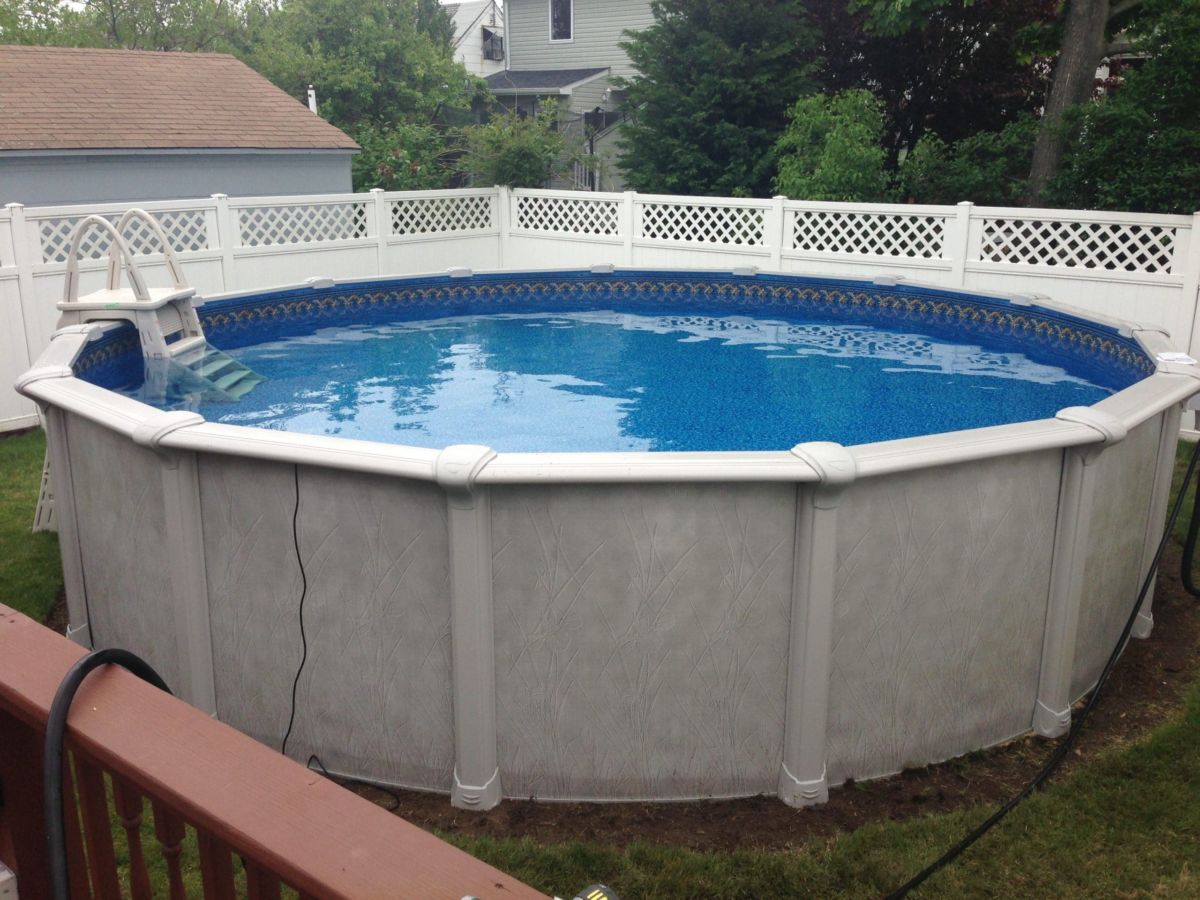
Installing an above ground pool is one of the most rewarding backyard projects you can take on. Done right, your pool will hold up for years. Done wrong, you’ll be chasing wrinkled liners, unlevel walls, and drainage headaches all summer.
This guide walks you through every phase of the installation process, from site selection to the moment you finally get in the water. Whether you’re installing a Buckingham, Conquest, Esprit, or any other Galaxy pool, these steps apply.
For model-specific details, download your pool’s installation manual from the links at the bottom of this page.
What You’ll Need Before You Start Installing an Above Ground Pool
Get everything on this list together before breaking ground on your above ground pool. Stopping mid-install to track down a laser level or extra rebar adds hours to the job.
Tools:
- Drill
- Box knife
- Transit or laser level with digital readout
- Small carpenter’s level
- Wide trowel
- Shovel
- Spray paint
- Stakes and rebar (two per track piece)
- Bungee cords (one per paver, plus one extra)
Materials:
- Masonry sand (consult your Pool Owner’s Guide for exact quantity; it varies by pool size)
- Pavers (one per pool foot plate)
- Plywood (for staging the pool wall roll)
Equipment:
- Skid steer or wheelbarrow for moving sand
- A couple of reliable helpers (you will need them)
Step-by-Step Installation Guide
1. Unbox and Prep Your Liner
Remove your liner from the box and lay it out in direct sunlight. A warm liner stretches more easily during installation and leaves fewer wrinkles. Let it sit while you work through the early site prep steps.
2. Mark Your Pool Site
Drive a stake at the center of your intended pool location. Using tape or string measured to your pool’s radius, walk the circumference and spray paint the outline onto the ground. Add 2 to 3 feet of extra space beyond the marked circle. This is your over-dig buffer.
Site selection tips: Choose a flat area with good sun exposure. The ground must be level; even a few inches of slope across the pool footprint can cause the walls to buckle and the liner to stretch unevenly. Keep the pool at least six feet from any slope.
3. Prep Your Helper for Parallel Tasks
While you’re managing excavation, assign someone to assemble legs, the pump, and the filter, and to unbox any remaining accessories. Keeping tasks parallel saves significant time on installation day.
4. Excavate the Pool Area
Dig out the pool area to the appropriate grade. Dig down high spots rather than building up low ones. Compacted native soil is more stable than filled soil. Remove all sod, roots, rocks, and debris. Anything left under the liner is a potential puncture waiting to happen.
5. Bring In and Level the Sand
Bring sand into the excavated area with a skid steer, or use wheelbarrows and extra hands if you don’t have the equipment. Spread it out evenly across the pool footprint. You’ll refine the surface in later steps. At this stage, you’re establishing your working layer.
6. Assemble and Lay the Track
Assemble your track pieces and foot plates, then lay them around the marked circumference. Take your time here. The track is your pool’s foundation, and getting it right makes every following step easier.
7. Set and Level the Pavers
Place one paver under each foot plate. Use your transit or laser level to shoot the elevation of each paver. Your target: every paver within 1/8 inch of level with one another. This is the most critical precision step in the entire installation.
8. Confirm Paver Placement at Radius
Using your original center stake, measure the distance from the center to each paver. Every paver must sit at the exact radius. Even small deviations compound around the circumference and affect the final pool shape.
9. Fill Around the Track with Sand
Once pavers are confirmed level and at the correct radius, fill the space between the track and the surrounding ground with sand. This stabilizes the track footing.
10. Stake Down the Track
At the center of each track section, drive rebar stakes into the ground on both the inside and outside of the track. This locks the track in position while you work.
11. Final Level Check and Adjustment
Go around every paver one more time with your transit or laser level and record each height. Find the height that falls within the range of all readings, then bring every paver to that same number. Follow up with a small carpenter’s level on each paver to confirm it’s sitting flat.
12. Stage the Pool Wall
Open the pool wall box and confirm the bottom edge of the wall is facing down. Set the rolled wall on a piece of plywood at the center of your pool area. Plywood protects the wall from the ground and makes it easier to roll out.
13. Position Equipment Holes
Before you start unrolling, identify where your skimmer hole and return hole will need to land. Orient the rolled wall so these openings will face toward your planned equipment pad location.
14. Anchor the Start of the Wall
Bungee and stake the beginning of the wall to two spots on your first paver. This holds the wall in place while you unroll it.
15. Roll Out and Seat the Wall
One person feeds the wall from the center while another guides it into the track. Move steadily around the circumference. As you go, bungee the outside of the pool wall to each paver to keep it seated. If the wall ends leave a small gap when they meet, have one person hold each end and work your way around the pool, gently wiggling the wall until the gap closes.
16. Close and Secure the Wall
Bolt the wall seam with the hardware from your kit and attach the cover strip. Double-check that the wall is seated evenly in the track around the entire circumference.
17. Build the Sand Cove
Inside the pool walls, shape the sand at the base into a sloped “cove” that rises about 10 inches up the interior wall. This cove supports the liner at the wall-floor junction and reduces stress on the liner over time. Moisten the sand slightly before shaping. It holds its form better.
18. Begin the Backfill
Lightly backfill soil over the track, raising it about 1.5 inches along the outside of the pool wall. Don’t go further yet. You’ll complete the backfill once the pool is partially filled with water.
19. Smooth the Pool Floor
Use a wide trowel to smooth the sand across the entire pool bottom. Work in socks or bare feet to avoid leaving impressions. The smoother this surface, the cleaner and more wrinkle-free your liner will sit.
20. Install the Liner
Set the liner into the pool and hook it into the wall track, working in one direction around the pool. The liner you set in the sun earlier (Step 1) should be warm and pliable by now. An extra set of hands makes this step significantly easier.
21. Begin Filling with Water
Start filling the pool with water. As the water rises, work out any remaining liner wrinkles by hand. Move carefully and avoid pressing down on the sand. Footprints in the base will show through the liner once the pool is full.
22. Attach Legs, Brackets, and Caps
While the pool fills, attach the legs, top brackets, and caps along the entire perimeter of the pool. Follow your model’s installation manual for the correct sequence.
23. Attach the Skimmer and Cut Equipment Holes
Mount the skimmer to the pool wall. Use a box knife to carefully cut the holes for the skimmer and return fitting. Take your time. These cuts can’t be undone.
24. Complete the Backfill
Once the pool is at least halfway full, complete the backfill on the outside of the pool wall to a minimum depth of 6 inches. Water weight inside the pool is what holds the wall stable during this step. Backfilling a partially empty pool can cause the wall to shift.
25. Assemble the Ladder, Then Wait
Assemble your ladder now, but don’t put it in the pool yet. Wait at least three days before placing it. The liner needs time to settle fully against the sand floor; a ladder placed too early can create pressure points that permanently mark the liner.
26. Enjoy Your Pool
After the liner has settled and your water chemistry is balanced, you’re done. Get in!
5 Common Installation Mistakes to Avoid With Your Pool Install
- Skipping the level check on pavers. This single step determines whether your pool walls stay straight or sag. Don’t estimate. Use a transit or laser level.
- Rushing the liner on a cold day. Cold liners are stiff and prone to cracking. If the weather isn’t cooperating, wait for a warm afternoon or let the liner sit in direct sun until it’s pliable.
- Backfilling too early. Backfilling before the pool has significant water weight can push the pool wall inward. Always wait until the pool is at least half full.
- Installing on a windy day. Wind makes it nearly impossible to control the pool wall during unrolling. Schedule installation for a calm day.
- Leaving debris under the liner. One pebble or root can puncture a liner under the weight of water. Clear the excavation area completely.
Frequently Asked Questions About Above Ground Pool Installation
How long does it take to install an above ground pool?
Most above ground pool installations take one to three days, depending on pool size, ground conditions, and how many helpers you have. Site preparation (leveling, excavation, and sand work) typically takes the most time.
How much sand do I need for an above ground pool?
Sand quantity depends on pool diameter and the depth of your base layer. A 24-foot round pool typically requires around four tons of sand for a 3 to 4 inch base. Consult your Pool Owner’s Guide for the exact amount for your model.
Does an above ground pool have to be perfectly level?
Yes. An unlevel base causes uneven wall stress, liner stretching, and can cause the pool to become structurally unstable over time. All pavers should be within 1/8 inch of each other.
When is the best time of year to install an above ground pool?
Late spring, when temperatures are consistently warm, is ideal. Warm weather softens the liner and makes sand work easier. Avoid installing during cold snaps or rain.
Do I need a permit for an above ground pool?
Permit requirements vary by location. Check your local building codes and homeowner’s association rules before you break ground. Some municipalities also require fencing around pools of a certain depth.
Installation Manuals by Pool Model
Download the installation manual for your specific Galaxy pool:
- Conquest Pool Installation Manual
- Esprit Pool Installation Manual
- Lagoon Pool Installation Manual
- Panache Pool Installation Manual
- Regency Pool Installation Manual
- Synergy Pool Installation Manual
It’s Time to Get Your Pool Installed
Visit any Galaxy Pool Spa Patio showroom to speak with a design specialist, or browse our above-ground pool selection online. Our team can help you choose the right pool for your yard and walk you through everything you need for installation day.
Galaxy has showrooms in Texas, Oklahoma, and Arkansas. Find the one nearest you.
Want to learn more? Visit any one of our 5 locations to speak to one of our design specialists or shop our Above Ground Pools online.