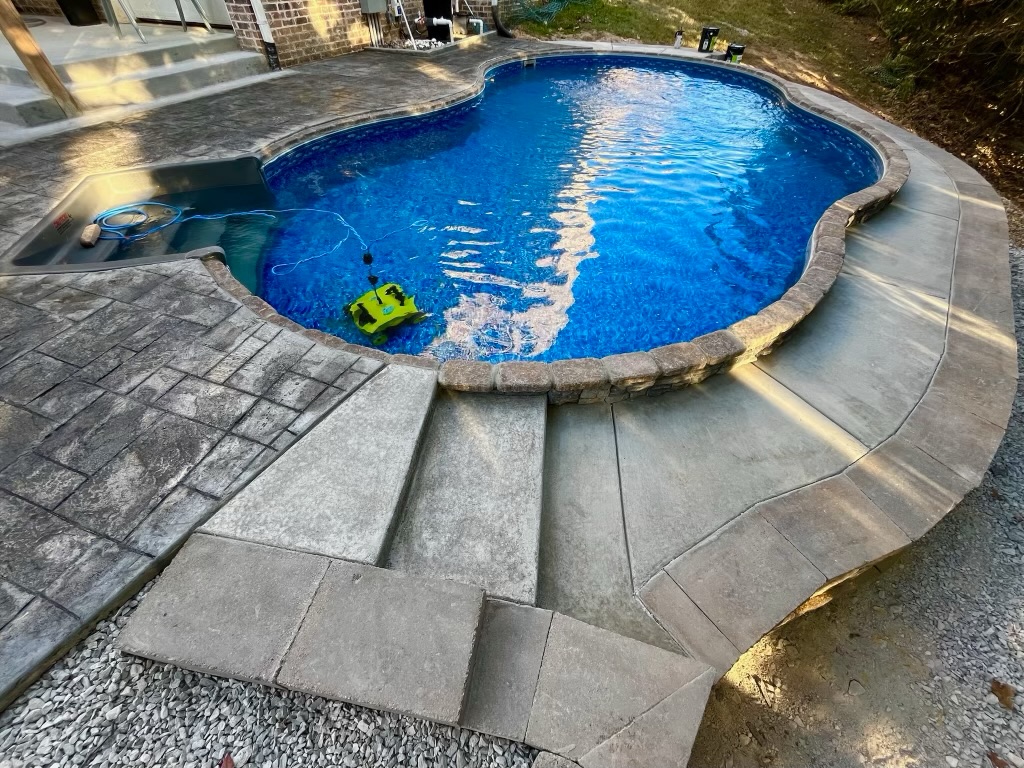
Every pool loses water. The skin of warm water at the surface meets cooler, drier air, and a portion of it turns to vapor and leaves the pool entirely. Add wind, sun, swimmers, and water features into the mix, and the loss adds up faster than most homeowners expect.
Pool Water Loss Is Normal. The Question Is How Much.
The trouble starts when the rate of loss outpaces what evaporation alone can explain. That is usually the first sign of a leak, and across the climate range Galaxy Pool Spa Patio serves throughout Oklahoma, Western Arkansas, and North Texas, leaks become a costly problem when they are ignored. Lost water means lost chemicals, higher utility bills, eroded fill dirt around the pool shell, and damage to the equipment pad over time.
This guide walks you through what is normal, how to run a simple test that distinguishes evaporation from a leak, and where leaks tend to hide once you confirm one exists.
How Much Water Loss Is Normal?
A residential pool with no cover typically loses between a quarter inch and a half inch of water per day to evaporation. Over a week, that adds up to roughly one to two inches.
Several conditions push the rate higher than average:
- Hot daytime temperatures paired with cool nights create a surface temperature differential that accelerates evaporation.
- Low humidity, common in parts of Oklahoma and Texas during late summer and early fall, draws moisture out of the pool faster.
- High winds skim water off the surface and replace humid air above the pool with dry air.
- Direct sun exposure throughout the day raises water temperature and speeds up loss.
- Heated pools and pools with waterfalls, fountains, or aerators lose water faster than still, unheated pools.
If your pool is losing less than an inch per week, evaporation is almost certainly the cause. If you are losing two inches or more per week, or more than an inch in a single day, it is worth investigating further.
How to Run the Bucket Test
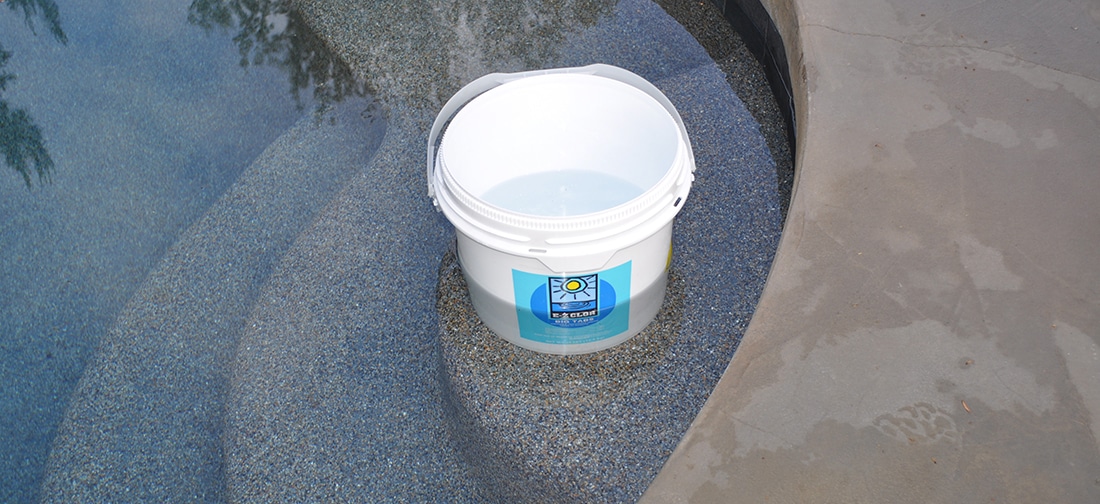
The bucket test is the most reliable at-home method for distinguishing between evaporation and a leak. It works because a bucket of pool water sitting in the pool itself experiences the same air temperature, humidity, and wind conditions as the pool surface. If the pool loses water faster than the bucket, the difference has to be coming from somewhere other than evaporation.
Here is how to run it:
- Fill a five-gallon bucket with pool water, leaving about an inch of space at the top.
- Set the bucket on the second step of the pool so it stays submerged but stable. Weight it with a rock if needed.
- Mark the water level inside the bucket and the pool water level outside the bucket using waterproof tape or marker.
- Turn off the pump and any water features. Do not swim or add water during the test.
- Wait 24 hours. Compare the two levels.
If both levels drop by the same amount, the water loss is due to evaporation. If the pool level dropped noticeably more than the bucket level, you likely have a leak.
For a more complete picture, run the test again with the pump on. If the pool loses significantly more water while the pump is running, the leak is in the pressure-side plumbing, the filter, or the pump itself. If the loss rate is similar whether the pump is on or off, the leak is in the pool structure or on the suction side.
7 Common Sources of Pool Leaks
Leaks rarely announce themselves. Most are slow, hidden, and located where you would not think to look first. The most common sources include:
- Skimmer throats: Cracks where the skimmer body meets the pool wall are one of the most frequent leak sources, especially in pools that were not properly winterized in past seasons. Freeze damage from previous winters can show up as slow leaks the following summer.
- Return jet fittings: The seal around return fittings degrades over time. A failed gasket here can let a steady trickle of water out behind the pool wall, where it travels underground before you notice it.
- Pool light niches: The conduit that runs to your pool light passes through the pool wall and is sealed at the niche. When that seal breaks down, water moves out through the conduit.
- Plumbing lines: Underground pressure or suction lines can develop pinhole leaks, joint failures, or freeze cracks. These are the hardest leaks to find and usually require professional leak detection equipment.
- Vinyl liner tears: In vinyl pools, punctures from ladders, dropped objects, or seam separation cause direct water loss. Many liner leaks are repairable with a patch kit if caught early.
- Cracks in concrete or gunite: Hairline cracks in plaster or gunite shells can leak thousands of gallons over a season. These often show up after ground shifts or freeze cycles.
- Equipment pad leaks: Pump seals, filter o-rings, valve gaskets, and union fittings all wear out. Equipment leaks are usually the easiest to spot because the water collects on the pad itself.
What Are Warning Signs Beyond a Dropping Water Level?
Sometimes, the water level isn’t the first thing you notice.
Other indicators that point toward a leak include:
- Soggy or unusually green patches in the lawn near the pool
- Settling or sinking areas in the decking, persistent air bubbles in the pump basket or return jets
- Chemicals that seem to need topping off far more often than usual
- Visible cracks in tile, grout, or plaster.
If two or more of these show up together, you are very likely dealing with a leak rather than evaporation.
How to Reduce Normal Evaporation
If your bucket test confirms evaporation is the cause, there are practical ways to slow the loss:
- A solar cover or safety cover used overnight reduces evaporation and retains heat in the pool, lowering heating costs.
- Windbreaks, such as fencing, landscaping, or strategically placed shrubs, reduce surface disturbance. Turning off waterfalls, fountains, and aerators when the pool is not in active use slows circulation at the surface. Keeping the water temperature a few degrees lower reduces the rate of vapor loss, particularly in heated pools.
Frequently Asked Questions
How much water should a pool lose per day?
A typical residential pool loses a quarter inch to a half inch per day to evaporation, or roughly one to two inches per week. More than two inches per week or more than an inch in a single day suggests a leak.
Can a pool lose water in cool weather?
Yes. Cooler air with low humidity actually pulls moisture out of pool water at a higher rate than warm, humid air. Fall and early winter evaporation is often higher than homeowners expect.
Does my pool lose more water when the pump is running?
Pools with pressure-side plumbing leaks lose more water when the pump runs. Pools with suction-side leaks or structural leaks tend to lose water at the same rate regardless of pump status.
How do I find a leak in my pool?
Start with the bucket test to confirm a leak exists. Then inspect the equipment pad for visible wet spots, check the ground around the pool for soggy areas, and look at the skimmer throat, return fittings, and light niches for visible cracks or seal failures. Hidden underground leaks usually require professional leak detection.
When should I call a pool professional?
If your bucket test shows water loss beyond normal evaporation and you cannot locate the source by visual inspection, it is time to bring in a technician. The longer a leak runs, the more damage it causes to the pool shell and the surrounding ground.
Galaxy Service Can Help You Find the Source
If you have run the bucket test and confirmed your pool is losing water faster than evaporation explains, Galaxy’s service team can schedule a leak detection visit at your home. Our technicians work with pools across all seven of our showroom regions in Prosper, Fort Worth, Fort Smith, Rogers, Norman, Oklahoma City, and Tulsa, and we carry the diagnostic equipment needed to locate underground and structural leaks that visual inspection alone cannot find.